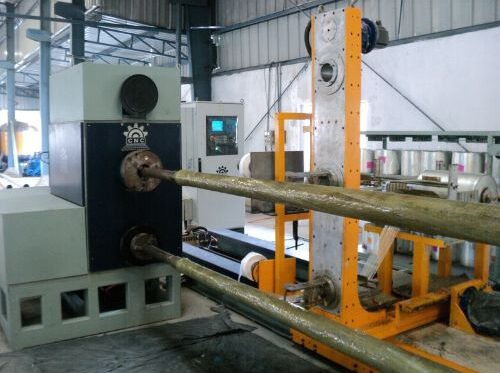
At Helipole, our composite poles are manufactured using the Filament Winding Process—a highly advanced and proven method for producing fiber-reinforced polymer (FRP) structures. This technology ensures each pole delivers unmatched strength, consistency, and durability, even in the most demanding environments.
What is Filament Winding?
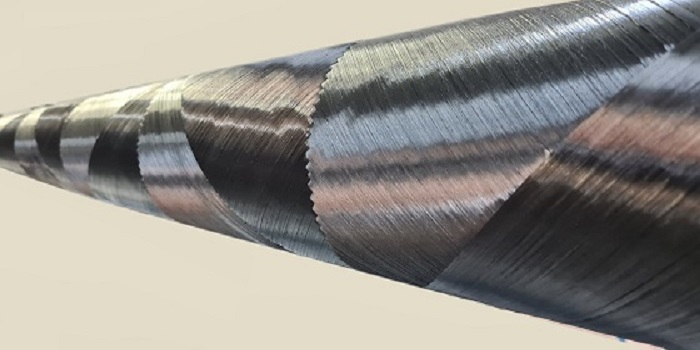
The Filament Winding Process is a computer-controlled manufacturing technique where continuous strands of E-glass fibers are wound under tension around a rotating mandrel in predetermined patterns. The fibers are impregnated with high-quality resin and layered precisely to achieve superior structural integrity and load-bearing capacity.
Once the required thickness and design are achieved, the mandrel is cured, and the finished composite pole is released—resulting in a lightweight yet extremely robust structure.
Why Filament Winding?
Our adoption of this process brings multiple advantages:
High Strength-to-Weight Ratio
Poles are lightweight yet capable of handling heavy loads and high wind speeds.
Precision & Consistency
Automated winding ensures uniformity, eliminating defects common in traditional manufacturing.
Corrosion Resistance
The resin-fiber matrix protects against rust, rot, and chemical exposure.
Design Flexibility
Poles can be engineered with different thicknesses, diameters, and performance specifications.
Long Service Life
Superior fatigue resistance ensures reliable performance over decades, even with minimal maintenance.
Applications of Filament-Wound Poles
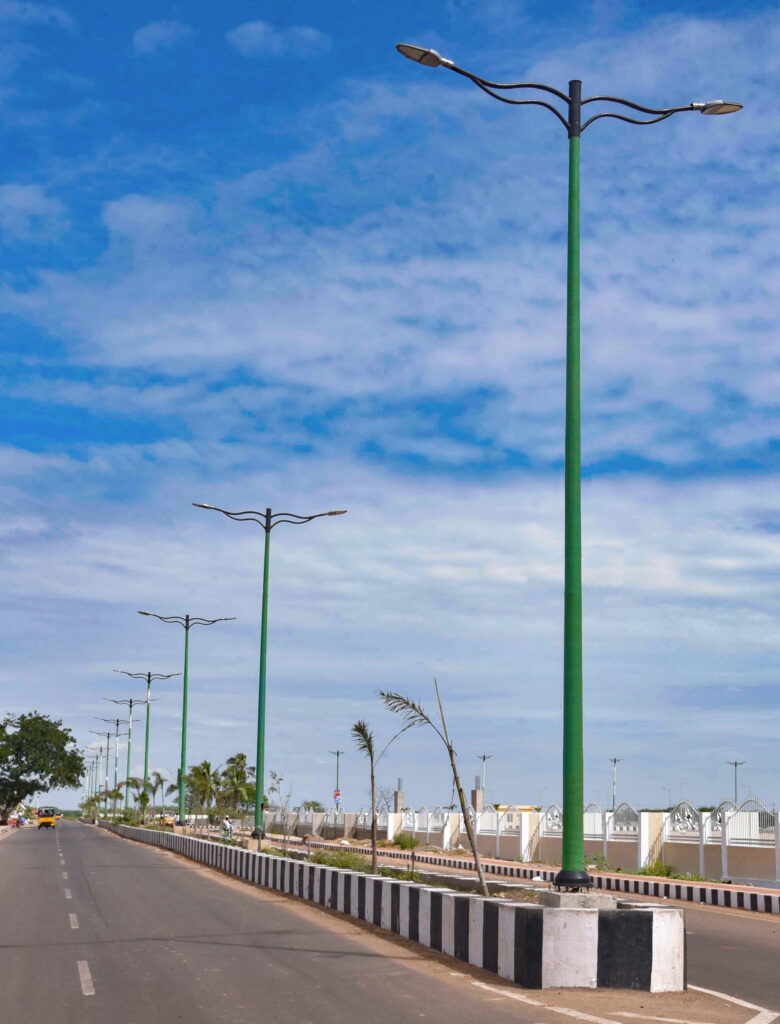
Street & Highway Lighting
sleek, corrosion-free, and cost-effective.
Telecommunication Towers
lightweight poles that support signal infrastructure.
Airports & Coastal Areas
ideal for harsh and corrosive environments.
Smart City Infrastructure
supports modern, future-ready urban development.
Commitment to Innovation
By leveraging the Filament Winding Process, Helipole ensures that every pole we produce meets the highest standards of safety, durability, and sustainability. This technology not only strengthens infrastructure today but also paves the way for smarter, greener solutions for tomorrow.